Skip to content
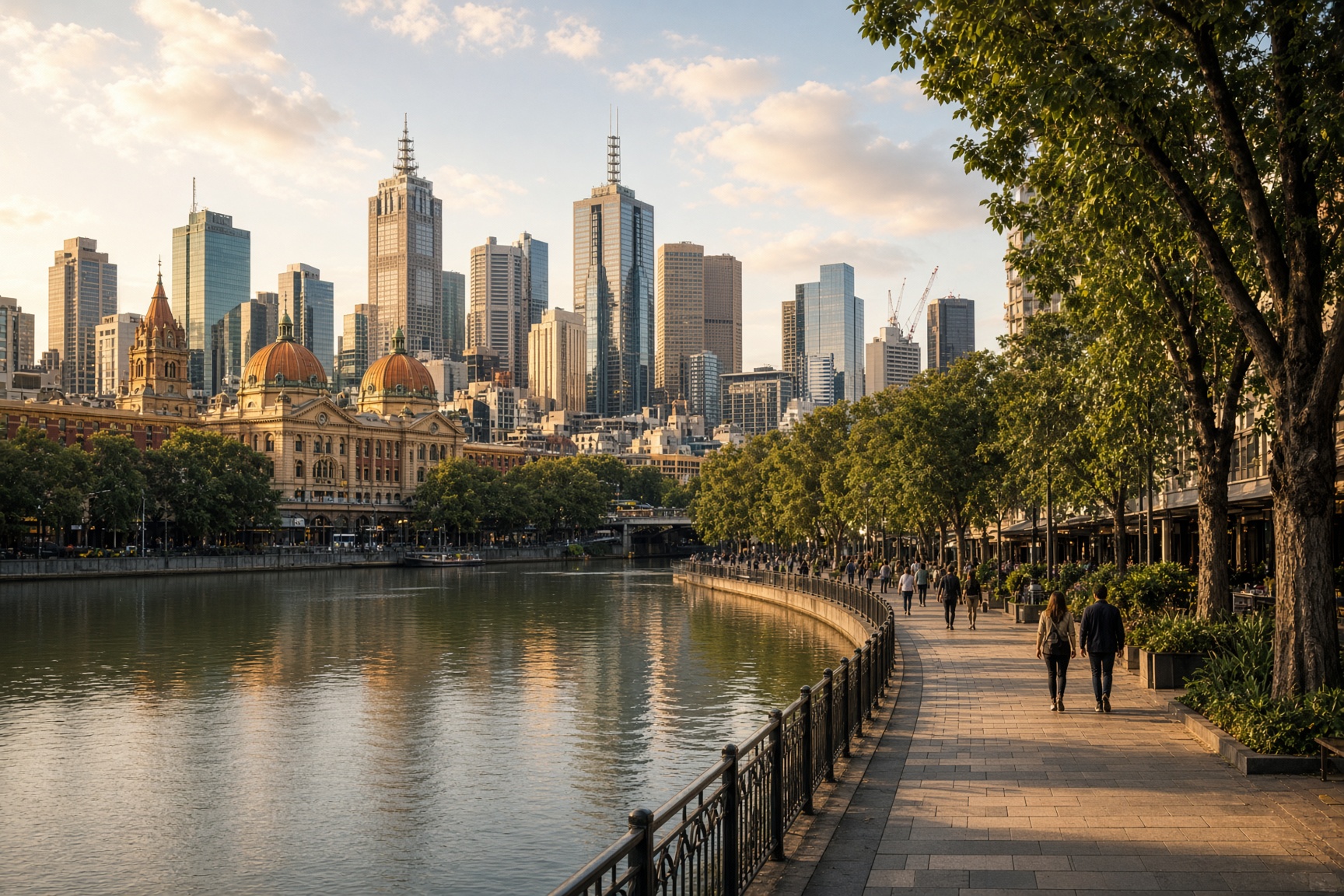
Melbourne skyline and city centre at sunset across the Yarra River

United Kingdom to Australia

Cheap Flights to Melbourne

Travellers from the UK can compare flight options, weigh cabin class, and plan a considered journey to Melbourne — a city of laneways, coffee, river walks and a cultural life that rewards a long-haul flight.

Why Melbourne, why now

A city that feels different the moment you land

Cheap flights to Melbourne are not only a search for a low fare. For UK travellers they are the start of a journey to a city that sits apart from Sydney’s harbour glamour and the reef-and-rainforest pull of Queensland. Melbourne is Australia’s most European-feeling capital: trams in the Hoddle Grid, Victorian facades, a serious food culture, and laneways that hide bars, galleries and coffee counters behind unassuming brick.

That character is why so many people from Britain return. You can spend a week on foot, moving from Queen Victoria Market to the Royal Botanic Gardens, then ride a tram to a neighbourhood restaurant that would hold its own in London. Sport, live music and independent shops sit close together. The Yarra River gives the centre a clear spine, and the Great Ocean Road is close enough to consider as a day or overnight trip.

Planning well still matters. The flight from the UK is long, usually with at least one connection, so comparing dates, departure airports and cabin options can change how you feel on arrival. This page is written for that UK search intent: how to look for competitive economy fares, when business class is worth considering, and what to do once you reach Victoria.

Yarra River in Melbourne with the city skyline beyond the promenade
The Yarra (Birrarung) threads the city, with Southbank and the skyline a short walk from Flinders Street Station.

At a glance

Quick Melbourne flight information

Use this snapshot before you compare itineraries. It is a planning frame, not a fare quote — prices move, and the right option depends on dates, airports and how you want to travel.

  • Destination

    Melbourne, Australia

    Victoria’s cultural capital

  • Main airport

    Melbourne (MEL)

    Tullamarine, northwest of the city

  • Departure region

    United Kingdom

    Compare more than one UK airport

  • Popular departure

    London

    Heathrow and Gatwick are common starts

  • Cabin options

    Economy and Business

    Choose by rest, not only fare

  • Planning note

    Long-haul with a stop

    Allow 21–26 hours typical journey time

Ready to compare

Explore flight options to Melbourne

See available UK and London departures, then weigh economy and business class against the journey you actually want to take.

Long-haul aircraft at dusk for UK to Melbourne travel

Economy from Britain

Cheap flights from UK to Melbourne

Searching for Cheap flights from UK to Melbourne is less about chasing a single advertised figure and more about shaping a flexible itinerary. Fares on this route move with season, school holidays, events in Victoria and how much capacity is sitting on connecting hubs. Treat the first price you see as a starting point, then look at the whole journey.

Flexible dates help more than almost anything else. A departure shifted by two or three days, or a return that avoids a UK bank holiday, can change both availability and comfort. Midweek flights are often quieter than Friday and Sunday peaks. If you can travel in shoulder periods — late autumn in Britain, or Melbourne’s cooler months — you may find a calmer cabin as well as a more competitive fare.

Compare UK departure airports rather than assuming London is automatically cheapest or easiest. Manchester, Birmingham, Edinburgh and other cities can alter the connection, the total time in the air, and the cost of getting to the airport. A convenient local start sometimes wins once you add rail, parking or an extra hotel night in the capital.

Connecting routes are normal on this corridor. Look at the length of the layover, whether you change terminals, and how you would feel if a first sector ran late. Very tight connections look efficient on paper and feel brittle in practice. Also check baggage: a fare that looks sharp until you add a checked bag is not the bargain it appeared to be. Compare the total trip — time, luggage, arrival hour — not only the headline price.

From the capital

Cheap flights from London to Melbourne

London remains the most important UK gateway for Australia, which is why Cheap flights from London to Melbourne is such a common search. Heathrow and Gatwick both feed long-haul networks that reach Melbourne via the Middle East, Asia or other Australian cities. That density of choice is useful — it also means you should slow down and compare itineraries, not only airlines.

Journey duration from London typically sits in the low-to-mid twenty hours when the connection is efficient, and can stretch well beyond that if the layover is long or the routing is indirect. A one-hour connection can feel anxious after a delayed inbound; a five-hour wait can feel weary unless the airport is comfortable. Aim for a window that gives you time to walk, eat and re-clear security without sprinting.

Routing possibilities vary by date. Some journeys go through a single well-connected hub; others add a domestic Australian sector into Melbourne. Neither is automatically better. What matters is when you land, how many times you change aircraft, and whether the seats on the longest sector give you a realistic chance of rest. Arrival in the morning can make the first day easier; a late-night landing asks more of your hotel transfer.

Baggage allowances deserve a second look on London departures, because mixed-carrier tickets sometimes split rules between sectors. Confirm cabin baggage size as well as checked weight, especially if you are carrying gifts or sports equipment. Then compare options side by side: total time, stops, airport of departure, and what is included. The cheapest London fare is only a good fare if it still looks sensible after those extras.

Premium long-haul

Business class flights from UK to Melbourne

A journey of this length is why many people look at Business class flights from UK to Melbourne. Economy can be perfectly workable if you sleep easily and have days to recover. Business class is less about luxury for its own sake and more about arriving able to think, walk and enjoy the first evening.

  • Seating comfort. Greater recline, and on many long-haul aircraft a lie-flat bed on the longest sector, changes how the night pass feels.
  • Personal space. Direct-aisle access and a defined seat shell reduce the sense of being in a dense cabin for twenty hours.
  • Lounge access. Where included, a lounge can turn a connection into a shower, a quiet meal and a place to reset rather than a terminal wait.
  • Priority services. Faster check-in or boarding, where offered, is useful on a multi-leg day when small delays compound.
  • Premium dining. Better meal timing and a more considered menu help if you are trying to sleep on a particular sector.
  • Rest on long-haul. The value is concentrated on the longest flight. Compare that cabin carefully, even if a shorter connecting sector is in a different product.
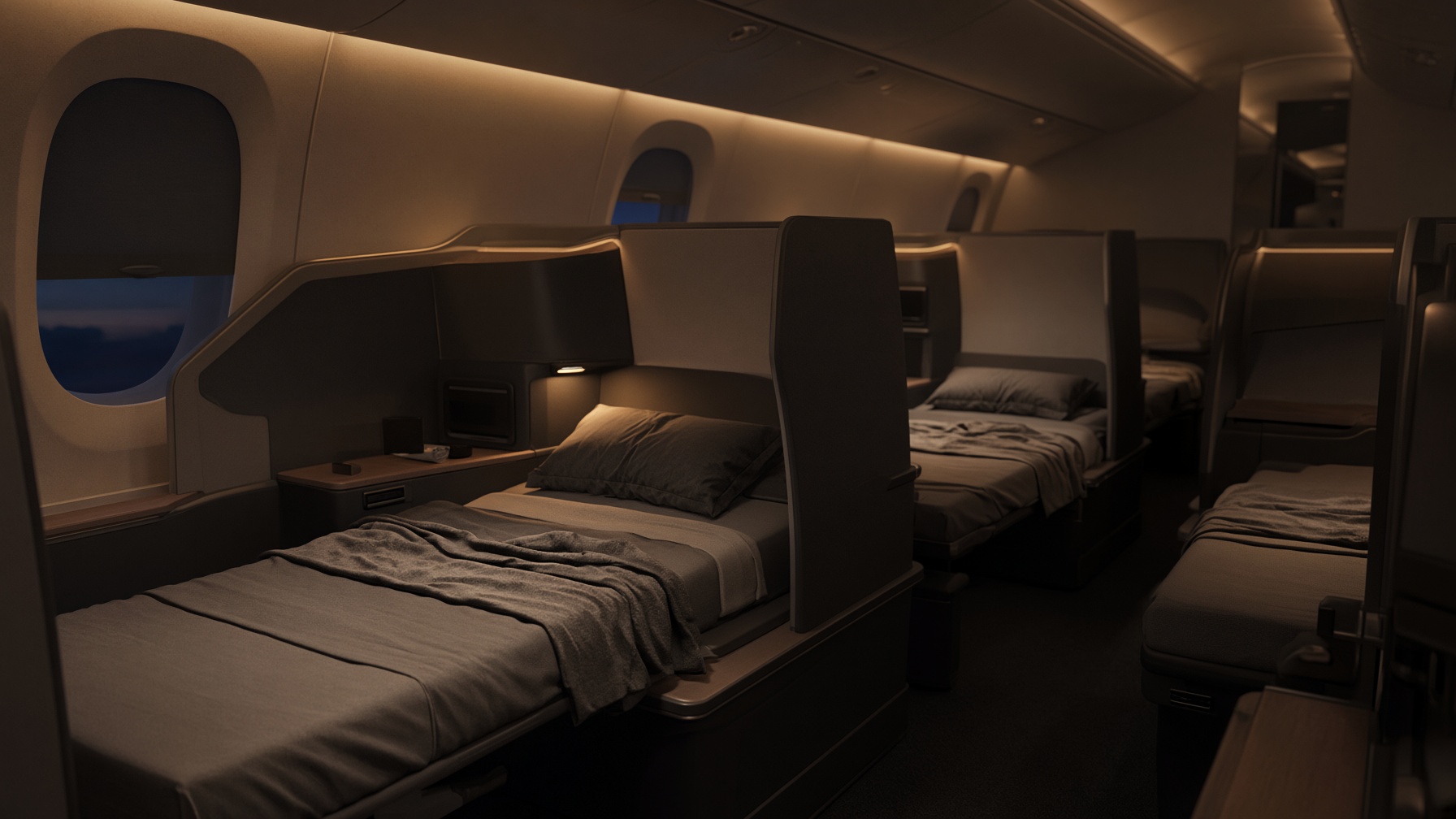
Business class cabin seating on a long-haul flight to Melbourne

From London specifically

Business class flights from London to Melbourne

Planning Business class flights from London to Melbourne is a slightly different exercise from a generic UK search, because the capital offers more departure banks and more connecting cities. Long-haul comfort is still the point: you want a seat you can rest in on the ocean-crossing sector, and a schedule that does not undo that rest with an awkward middle-of-the-night transfer.

Choose travel dates with the cabin in mind, not only the calendar. Award-style availability and retail premium seats both move. If your dates can flex, you may find a more suitable product on a neighbouring day without changing the trip’s purpose. Compare cabin options on the same routing — some journeys look similar in economy and diverge sharply once you look at seat maps and whether the longest flight is overnight.

Connection time deserves extra attention in a premium cabin. A lounge only helps if you can reach it. A short connection that requires a bus between terminals can erase the calm you paid for. Seating considerations include whether you prefer a window for sleep, direct aisle access, and how the cabin is arranged in pairs or a 1-2-1 layout. Those details are more important than a brand name on the ticket.

Baggage is usually more generous in business class, which matters if you are staying longer or packing for both city and coast. Still read the allowance, especially on tickets that combine carriers. Then plan the premium journey from London as a whole: getting to Heathrow or Gatwick without rush, a connection you can use, and an arrival into Melbourne that leaves you enough evening — or a proper night — before you need to be anywhere.
UK departure choices

Flights from UK to Melbourne

When you start comparing Flights from UK to Melbourne, the departure city is often as important as the date. London Heathrow and Gatwick offer the widest long-haul choice, but they are not the only sensible starts. Manchester has long been a practical alternative for the North. Birmingham can shorten a Midlands journey. Edinburgh and Glasgow matter if you would rather not add a domestic hop into London on top of a day that already includes a long connection.

Think in terms of the full door-to-door day. A slightly longer airborne routing from a closer airport can still be kinder than a 5am train, a second check-in, and a sprint at Heathrow. Look at how many times you handle bags, whether you can check through to Melbourne, and what time you would leave home. Those details rarely appear in a simple fare table, yet they decide whether the trip begins calmly.

Other factors to hold in one view: seasonality around UK school breaks, major events in Melbourne such as the Australian Open in January, and how arrival time lines up with hotel check-in. If you land early, you may want a room that allows an early drop of bags. If you land late, confirm that SkyBus, taxi or a booked transfer will still feel straightforward after a long-haul flight. Compare Melbourne Airport (MEL) itineraries carefully against any option using another Victorian airport, because the transfer into the city is part of the journey.

Time difference is another planning detail UK travellers feel on day one. Melbourne sits on Australian Eastern Time, usually nine to eleven hours ahead of Britain depending on daylight saving at both ends. Eastbound long-haul is tiring; a lie-flat seat, an overnight sector, or at least a quiet first evening can make the adjustment kinder. Do not pack the arrival day with a driving tour. Walk the river, eat something simple, and sleep.

Business class travel from the UK to Melbourne

A long-haul worth planning

Start planning your Melbourne journey

Whether you are comparing economy or a more restful cabin, the next step is to look at real itineraries from the UK.

Destination notes

Melbourne travel guide

Melbourne rewards travellers who like cities with layers. You can see the headline sights in a couple of days, then spend the rest of the week following coffee, galleries, parks and neighbourhoods. The notes below are written for a first or second visit from the UK, with enough context to plan rather than a checklist to rush.

Why visit Melbourne?

The food scene is the reason many people fall for the city. It is not only restaurants with tasting menus — though those exist — but a dense everyday culture of bakeries, Vietnamese and Greek rooms, wine bars in converted warehouses, and produce that shows up at Queen Victoria Market in the morning and on plates by lunch. Neighbourhoods such as Fitzroy, Carlton, Richmond and the CBD laneways each have a different appetite. You can eat well without a reservation every night, and you can also plan a few special meals if that is how you like to travel.

Coffee culture is not a slogan here. Melbourne’s independent cafés treat espresso with the seriousness other cities reserve for wine. A flat white done well, a quiet corner, and a morning paper or a walk still ahead is one of the simplest pleasures of a Melbourne holiday. Learn a couple of café names in the area around your hotel, then wander. The best cups are often a lane away from the main street.

Arts and culture sit close to daily life. The National Gallery of Victoria, the Australian Centre for the Moving Image, and the theatres around Southbank give the centre a serious cultural spine. Street art in the laneways is the informal counterpart: Hosier Lane and nearby alleys change constantly, so the walls you photograph will not be the same on a later trip. Live music rooms, independent bookshops and small galleries fill the inner north.

Melbourne laneways with colourful street art in Hosier Lane

Shopping runs from the 19th-century grace of the Block Arcade and the boutiques of Collins Street to the stalls of Queen Victoria Market and the vintage racks of Chapel Street and Brunswick. Architecture is part of the walk: ornate Victorian piles, the yellow-and-cream bulk of Flinders Street Station, Federation Square’s angular public rooms, and the gold-crowned Eureka Tower on the Southbank skyline. You feel the city’s boom eras stacked against each other.

Sport is a civic language. The MCG, the tennis in January, AFL through the winter, and the grand prix on the Albert Park circuit all pull locals into the same calendar. Even if you never buy a ticket, the city feels different on a big match day — trams packed, scarves out, pubs loud. Parks and gardens balance that intensity. The Royal Botanic Gardens, Fitzroy Gardens, the Tan track and the river parks mean you are never far from shade and water.

The Yarra River is the city’s quiet organiser. Southbank Promenade is the obvious stroll, with views back to Flinders Street and the Arts Centre spire. Early morning along the river, before the cruise boats and office crowds, is when Melbourne feels most like a place you could live. Then the laneways pull you back in — a coffee, a gallery, a hidden bar — and the day finds its rhythm.

Neighbourhoods give the visit its texture. Carlton still carries its Italian heritage on Lygon Street. Fitzroy mixes record shops, small galleries and restaurants that fill early. Richmond is useful if you like sport and a denser dining strip. St Kilda offers the bay, a slower sunset and a different light from the CBD. You do not need to stay in all of them. Pick a base, ride a tram, and let one or two areas become familiar. That is how Melbourne stops feeling like a list of attractions and starts feeling like a city you know how to move through.

Best things to do in Melbourne

You do not need to see everything. A slower loop through the centre, one market morning, one garden afternoon and one neighbourhood evening will tell you more than a packed itinerary. These are the places that consistently earn their reputation.

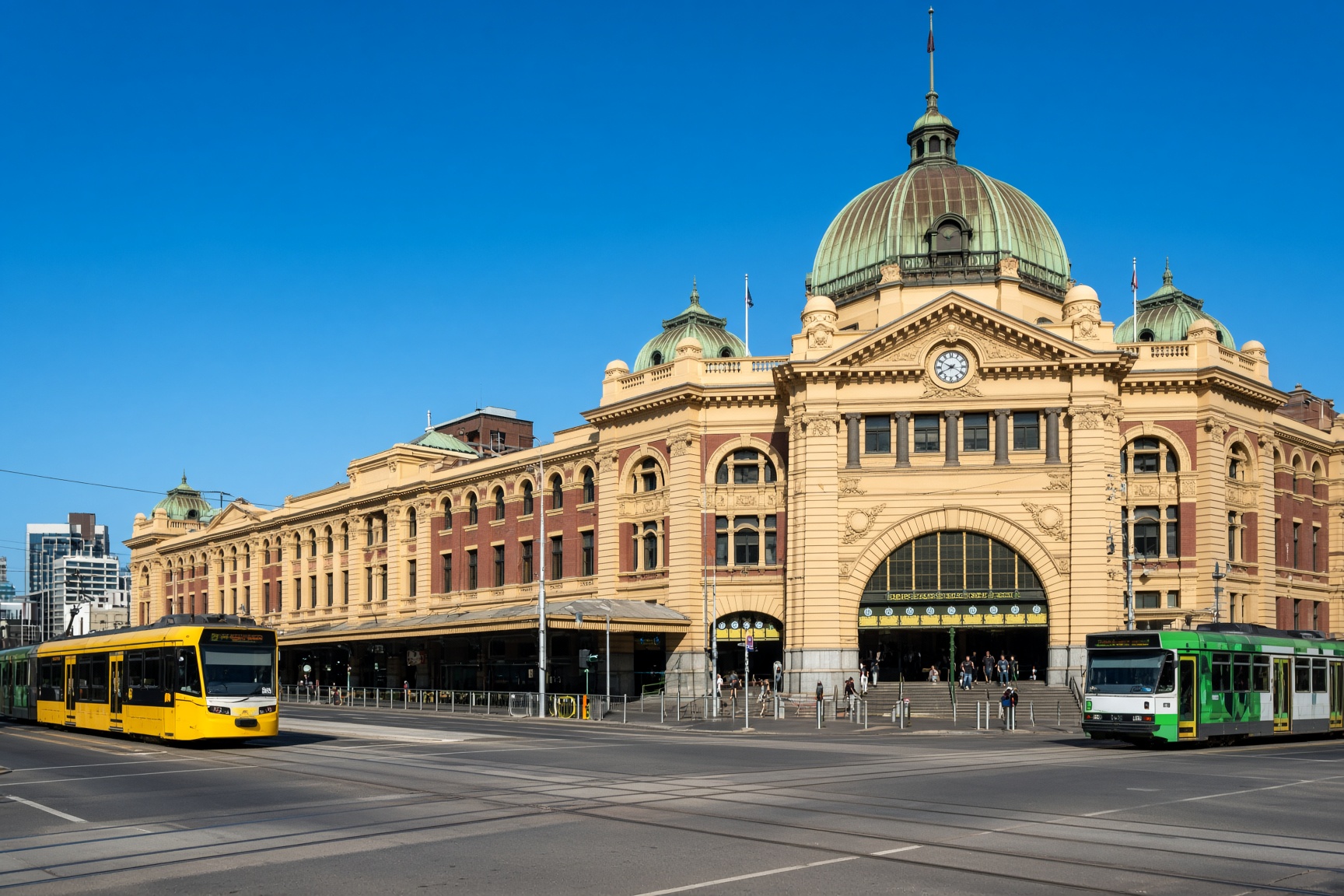
Flinders Street Station facade and clocks in Melbourne

Flinders Street Station and Federation Square

Meet under the clocks if you want the local ritual. The Edwardian station, with its dome and steps, is still the city’s most recognisable building. Cross the road to Federation Square for the public square, NGV Australia and a sense of how Melbourne stages civic life. From here the river, the trams and the laneways are all within a few minutes’ walk.

Queen Victoria Market stalls with fresh produce in Melbourne

Queen Victoria Market

Go in the morning. The sheds still feel like a working market: fruit, cheese, meat, flowers, and a deli counter that can assemble lunch. It is one of the most useful introductions to how Melbourne eats, and a practical stop if you are staying in a place with a kitchen. Check opening days before you plan a Monday visit.

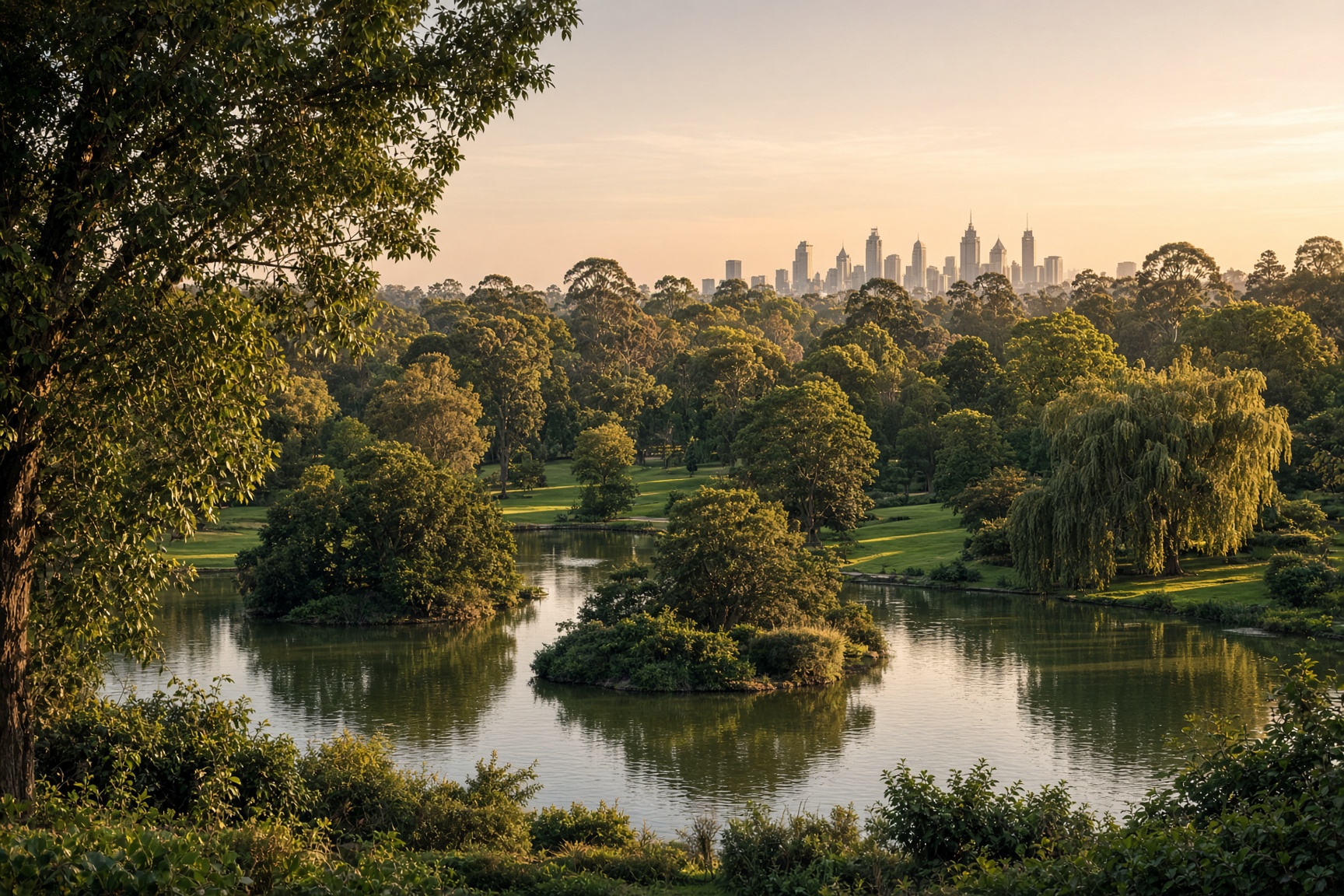
Royal Botanic Gardens Melbourne with ornamental lake and lawns

Royal Botanic Gardens

A short hop across the river from the centre, the gardens are where the city exhales. Walk the Ornamental Lake, find a lawn in the shade, and look back at the skyline through trees. Guilfoyle’s landscape still holds; it is one of the finest botanic gardens in the world and costs nothing but time. Wear comfortable shoes and leave space in the afternoon.

Laneways, the Yarra and the Great Ocean Road

Give a half day to getting lost between Flinders Lane, Degraves Street and Hosier Lane. Street art, espresso and small shops sit on top of one another. Then walk the Yarra at Southbank or from Princes Bridge — the classic view takes in the station, the Arts Centre spire and the water. If you have a spare full day, the Great Ocean Road is the outing many UK visitors most want: limestone stacks, coastal bush, and a long but memorable loop from the city. Start early, or consider an overnight in Apollo Bay or Port Campbell rather than rushing the light.

Other hours well spent: a tram to St Kilda for the beach and a slower sunset; the NGV International on St Kilda Road; a pie at a suburban ground if an AFL match coincides with your stay. Leave gaps. Melbourne is better when you have time to sit down.

Best time to visit Melbourne

Melbourne’s climate is temperate and famously changeable. The local line about four seasons in one day is a cliché because it is often true. Pack a layer in every month. Seasons below are southern hemisphere, so they sit opposite the UK calendar — useful if you want summer heat in a British winter, or a milder city break during the UK summer.

December – February

Summer

Warm to hot, long evenings, busier hotels. Australian Open energy in January. Beach days at St Kilda and busy restaurants. Book stays earlier if your dates are fixed.

March – May

Autumn

Often the most pleasant walking weather: milder days, softer light, and gardens turning. A strong choice if you prefer exploring on foot without peak-summer heat.

June – August

Winter

Cooler, shorter days, more chance of rain. AFL season, museum weather, and fewer outdoor crowds. Pack a coat. Good if you like cities more than beaches.

September – November

Spring

Blossom, longer light, and a city coming back outdoors. Still bring layers. A flexible season for mixing gardens, laneways and a coastal day if the forecast holds.

Weather and personal preference should drive the date more than a rumour about a universally cheap month. School holidays in both countries, major sporting events and Christmas–New Year all affect how full aircraft and hotels feel. Compare a range of dates and look at the whole trip cost — flights, nights and the kind of weather you actually want — rather than assuming one month is always lowest.

Before you book

Planning your Melbourne journey

A Melbourne trip from the UK is long enough that small decisions compound. Work through the list below once, then look at live itineraries with those constraints already in mind.

  1. Step 1

    Travel dates

    Search a window, not a single pair of days. Midweek and shoulder seasons can feel easier as well as more competitive.

  2. Step 2

    Departure airports

    Weigh London against Manchester, Birmingham, Edinburgh and others once you include the journey to the airport.

  3. Step 3

    Connection times

    Leave enough time to change terminals without sprinting. A calmer layover often beats the shortest total.

  4. Step 4

    Cabin class

    Decide how much rest you need on arrival. Compare the longest sector’s seat, not only the ticket cabin name.

  5. Step 5

    Baggage

    Read weight and cabin-bag rules before you choose a fare. Add the true cost of a checked case if you need one.

  6. Step 6

    Documents and arrival

    Check passport validity and Australia’s ETA or visa rules. Plan the MEL-to-city transfer and your first night’s stay.

Travel documents for Australia should be in order before you pay. Most UK passport holders need to apply for an Electronic Travel Authority or the relevant visitor authority; check the official Australian government guidance rather than assuming a stamp on arrival. Names on the ticket must match the passport. If you are transiting another country, confirm whether that stop has its own rules.

Arrival planning is part of the flight decision. Melbourne Airport sits northwest of the centre. SkyBus, taxis, rideshares and some hotel transfers cover the gap; time depends on traffic, typically around 25 to 45 minutes to the CBD when the road is clear, longer in the evening peak. Local transport in the city is straightforward once you are there. The myki card covers trams, trains and buses. Short hops in the central tram zone are simple, and the City Loop trains help if you are staying beyond walking distance. Many first-time visitors overestimate how much they need a car in the inner city — trams and walking usually suffice until you leave for the Great Ocean Road or the Yarra Valley.

Accommodation is easiest in the CBD, East Melbourne, Southbank or the inner north if you want to walk to dinner. Southbank is handy for the river and arts precinct; Fitzroy and Carlton trade a short tram ride for better evenings in restaurants and bars. Docklands can be quieter at night. Book the first night so you are not choosing a suburb after twenty hours awake, and check whether early check-in is possible if your flight lands in the morning. If you plan a coastal day trip, a hotel with easy access to a rental car desk or a tour pickup point will save an early alarm.

Questions

Melbourne flights, answered

Practical answers for UK travellers comparing cheap flights to Melbourne and longer-haul cabin options. Still verify documents and live itineraries before you book.

Start by staying flexible on dates, then compare the full journey rather than the advertised fare alone. Look at total travel time, the number of stops, connection windows, and baggage rules. Searching a range of dates, including midweek departures, often reveals more competitive options than locking a single weekend.

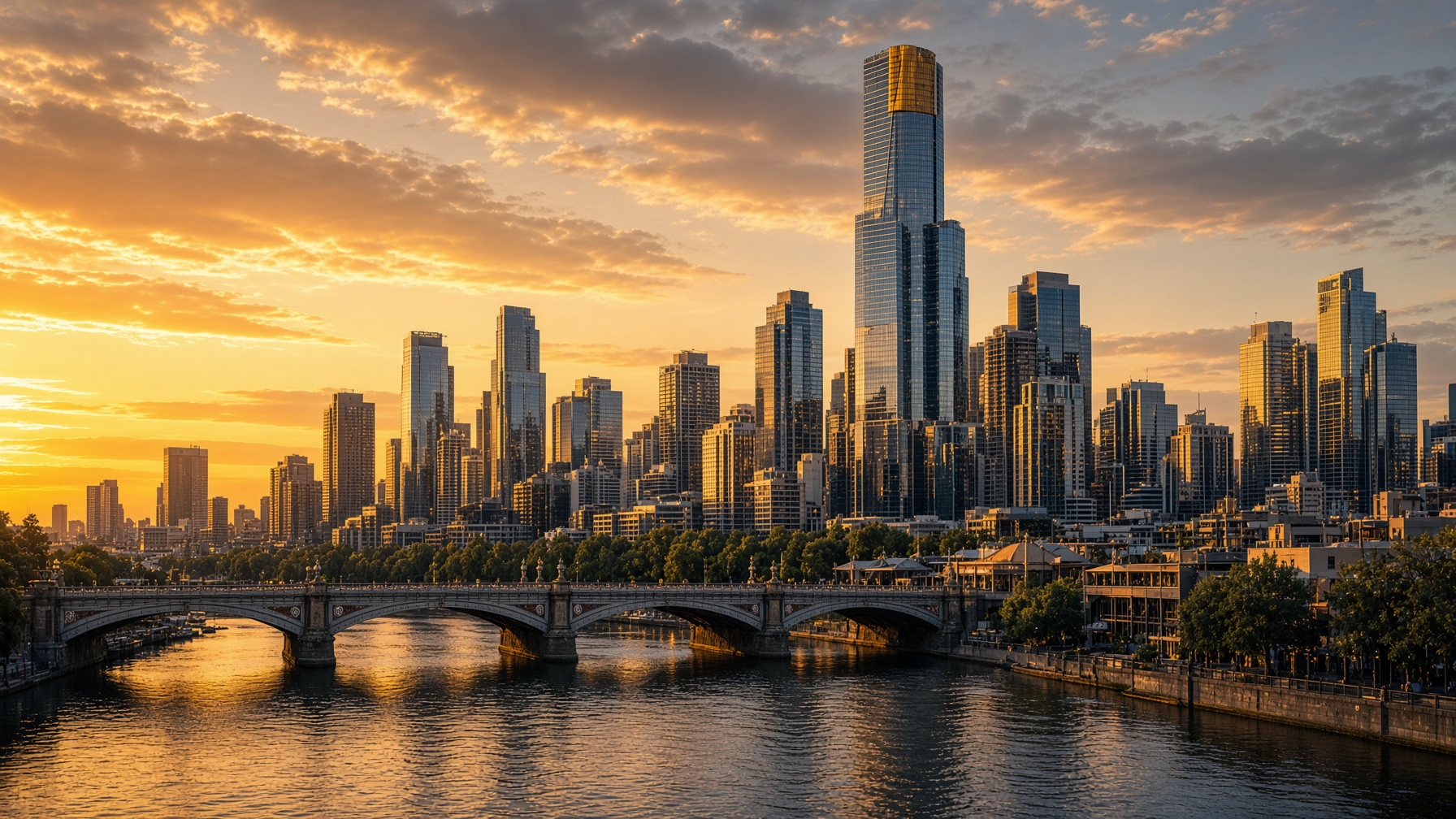
Melbourne city skyline at dusk, inviting travellers to plan Australia flights

Tickets2Australia

Explore your Australia flight options

You have the context. Compare live journeys from the UK to Melbourne and the rest of Australia when you are ready to look at dates and cabins in one place.